
Your smile is one of the first things people notice about you. Yet coffee, tea, red wine, and years of daily habits can push your teeth from bright white to a dull, yellowish shade. The good news? The best at home teeth whitening kits in 2026 have never been more effective, more affordable, or easier to use.
Whether you want fast results for a wedding, a job interview, or just everyday confidence, modern at-home whitening options deliver real results without the steep cost of an in-office treatment. We analyzed the top-selling kits on Amazon, dug through thousands of verified user reviews, consulted dental research, and evaluated real-world results.
In this guide, you’ll find 7 expert-tested picks covering whitening strips, LED whitening kits, whitening trays, and whitening pens — plus a clear breakdown of how each one works, who it’s best for, and what to watch out for. Let’s cut through the marketing noise.
What Are At Home Teeth Whitening Kits — And How Do They Work?
An at home teeth whitening kit is a consumer-grade system you use yourself, outside of a dental office, to lighten the color of your teeth. These kits typically contain one of two types of active ingredients: hydrogen peroxide (HP) or carbamide peroxide (CP). Both work by penetrating the outer enamel layer and oxidizing stain molecules deep inside the dentin.
Carbamide peroxide breaks down slowly, releasing hydrogen peroxide over a longer period. This makes it gentler — and ideal for people with tooth sensitivity. Hydrogen peroxide acts faster but wears off more quickly. Both are approved for safe consumer use when kept within recommended concentrations.
A newer class of whitening agents — called PAP (phthalimidoperoxycaproic acid) — is gaining traction for sensitive users. PAP whitens through a different oxidation pathway that doesn’t generate free radicals, meaning far less sensitivity compared to peroxide-based formulas.
Most kits fall into one of these delivery formats:
- Whitening strips — thin, flexible strips coated in whitening gel
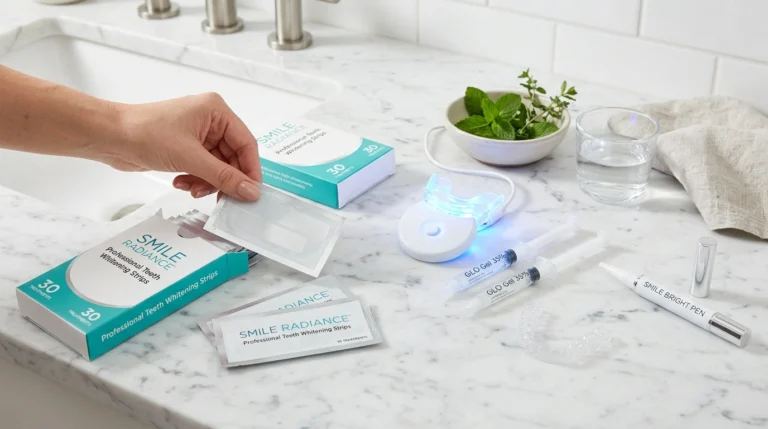
- LED whitening kits — a mouthpiece + gel combination accelerated by blue LED light
- Custom or prefilled trays — gel-filled molds that hug your teeth for even coverage
- Whitening pens — portable touch-up tools with a brush tip applicator
- Whitening toothpastes — low-concentration daily-use options
Key things to know before buying:
- Whitening kits only work on natural tooth enamel — not veneers, crowns, or fillings
- Results vary based on the type and depth of your staining
- Over-whitening can cause enamel erosion and lasting sensitivity
- The American Dental Association (ADA) recommends checking with your dentist first if you have restorations or gum issues
- Products with the ADA Seal of Acceptance have been independently evaluated for safety and efficacy
7 Best At Home Teeth Whitening Kits in 2026: Our Expert Picks
The at-home teeth whitening market is projected to exceed $8 billion globally by 2027, according to industry data cited by consumer health publications. With hundreds of products fighting for your attention, we narrowed the field to seven standout kits that deliver on their promises.
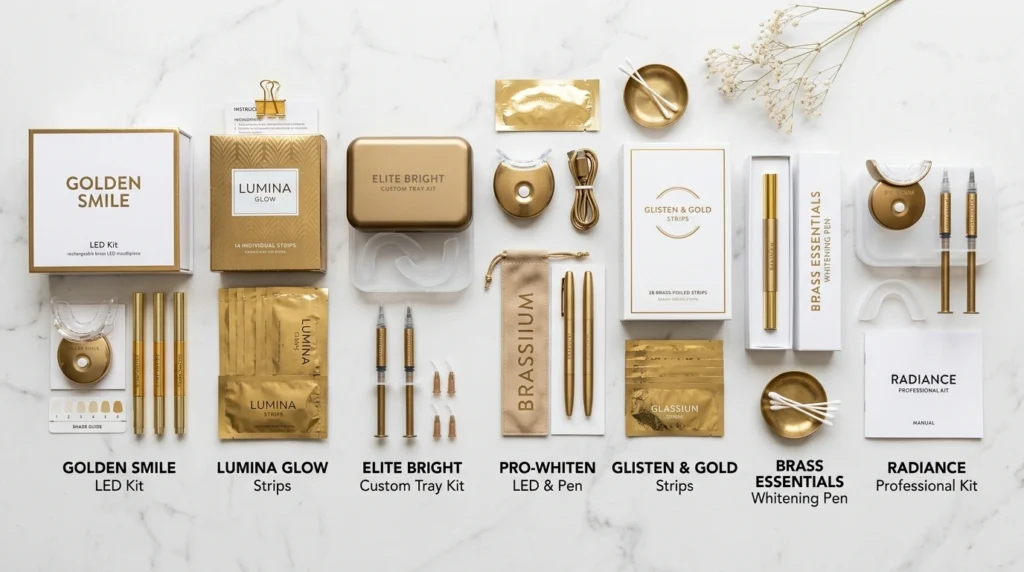
Quick Comparison: Best At Home Teeth Whitening Kits 2026
| Product | Type | Active Ingredient | Shades Gained | Price (Est.) | Best For |
| Crest 3D Whitestrips Professional Effects | Strips | Hydrogen Peroxide | Up to 14 shades | ~$45 | Best Overall |
| AuraGlow Deluxe Kit | LED + Gel | 35% Carbamide Peroxide | Up to 10 shades (7 days) | ~$48 | Best LED Kit |
| GLO Brilliant Whitening Device | LED + Heat + Gel | Proprietary HP Gel | Up to 12 shades | $159–$299 | Best Premium |
| Snow Teeth Whitening Kit | LED + Dual Serum | HP + CP Combo | Up to 9 shades | ~$47 | Best for Restorations |
| Lumineux Whitening Strips | Strips | PAP-Free / Non-toxic | Visible brightening | ~$30 | Best Sensitive Teeth |
| HiSmile PAP+ Whitening Pen | Pen | PAP+ | Touch-up whitening | ~$22 | Best Maintenance Pen |
| Opalescence Go Prefilled Trays | Prefilled Trays | 15% Hydrogen Peroxide | 4–6 shades | ~$55 | Best Tray Option |
1. Crest 3D Whitestrips Professional Effects — Best Overall
Crest 3D Whitestrips have earned the American Dental Association (ADA) Seal of Acceptance — the only over-the-counter whitening strips to have done so. That’s not a marketing claim; it’s an independent evaluation of both safety and effectiveness.
Each strip is coated in a no-slip hydrogen peroxide gel. The Advanced Seal technology keeps them in place even if you talk or drink water. You get 20 Professional Effects treatments plus two 1-Hour Express strips in a full kit. Reviewers with 20+ years of coffee and smoking habits have reported seeing dramatic improvements within two to three weeks.
The downside? Some users experience mild sensitivity, especially after the first few sessions. Spacing treatments by a day helps significantly.
- Price: ~$45 | Treatments: 22 | Time per session: 30 minutes
- Key claim: Removes up to 14 years of stains
- Sensitivity: Mild to moderate — manageable with a break day
- ADA Seal: Yes — the only OTC strip to have it
2. AuraGlow Deluxe Teeth Whitening Kit — Best LED Kit
The AuraGlow Deluxe Kit combines a 35% carbamide peroxide gel with an LED accelerator light — the kind you hold in your mouth for 30 minutes. The LED is designed to activate and speed up the whitening gel’s effectiveness.
At around $48 for 20+ treatments, this works out to under $2.50 per session, making it one of the best value LED whitening systems on the market. The brand also sells an extra-strength whitening pen separately for about $20, which is great for targeted touch-ups.
According to Mayo Clinic, carbamide peroxide is a well-established whitening agent with a long track record of safe use in consumer products when applied correctly.
- Price: ~$48 | Treatments: 20+ | Time per session: 30 minutes
- Key claim: Up to 10 shades brighter in 7 days
- Sensitivity: Lower than strip equivalents — CP releases slowly
- Best for: First-time users and budget-conscious buyers
3. GLO Brilliant Personal Teeth Whitening Device — Best Premium
GLO Science uses a patented Guided Light Optics (GLO) technology — a combination of gentle warmth and blue LED light — to activate its proprietary whitening gel. The mouthpiece design creates a closed, warm environment that maximizes gel-to-enamel contact with every 8-minute session.
The brand recommends four 8-minute sessions per day for five days, which is a larger time commitment than strips. But the results are faster and more even. The kit comes with 60 gel applications, meaning you can do multiple rounds before needing a refill.
The GLO device ranges from $159 to $299 depending on the package. It’s one of the pricier options, but it’s popular among users who want professional-quality whitening at home without visiting a dentist.
- Price: $159–$299 | Gel: 60 applications | Time per session: 8 minutes (4x/day)
- Technology: Guided Light Optics (GLO) — heat + LED
- Sensitivity: Minimal — proprietary gel is formulated for comfort
- Best for: Speed, premium results, and deep-stain users
4. Snow Teeth Whitening Kit — Best for Dental Restorations
Snow Teeth Whitening stands out for one key reason: it’s one of the few kits explicitly formulated and tested to be safe over veneers, crowns, and bonding. Given that roughly one in five American adults has at least one dental restoration, this is a major selling point.
The system uses a dual-serum approach — one serum leverages fast-acting hydrogen peroxide, and the other uses slow-release carbamide peroxide. Together, they deliver both immediate brightening and sustained whitening over a treatment period. The wireless LED mouthpiece removes the need for any cords or awkward positioning.
- Price: ~$47 | Treatments: 21+ | Time per session: 9–30 minutes
- Safe on: Veneers, crowns, bonding, braces
- Technology: Dual HP + CP serum + wireless LED
- Best for: Anyone with dental work who still wants visible whitening
5. Lumineux Whitening Strips — Best for Sensitive Teeth
Lumineux is certified non-toxic and uses no peroxide at all. Instead, the strips rely on Dead Sea salt, essential oils, and a proprietary formula to brighten enamel without triggering the sensitivity response that peroxide users often experience.
If you’ve tried other whitening products and always ended up with that sharp, achy “zing” feeling, Lumineux is worth trying. Results are more gradual than peroxide-based kits, but for people with chronic sensitivity, gradual whitening without pain is a genuine win.
- Price: ~$30 | Strips: 21 treatments | Time per session: 15 minutes
- Active ingredient: Peroxide-free / PAP-free / Non-toxic certified
- Sensitivity: Essentially zero — designed specifically for sensitive teeth
- Best for: Sensitive teeth, peroxide-reactive users, and those with enamel erosion concerns
6. HiSmile PAP+ Whitening Pen — Best Maintenance Pen
The HiSmile PAP+ Whitening Pen is a pocket-friendly tool for keeping your smile fresh between full whitening cycles. PAP (phthalimidoperoxycaproic acid) whitens enamel without producing the free radicals that cause sensitivity — making this the gentlest effective whitening agent currently on the consumer market.
You simply twist the base, apply the gel with the brush tip to each tooth, and let it sit. It’s not a replacement for a full whitening kit, but as a maintenance tool used two to three times per week, it extends the life of your whitening results significantly.
- Price: ~$22 | Time per use: 10 minutes | Sensitivity: None reported
- Technology: PAP+ — zero free radical generation
- Best for: Weekly touch-ups, travel, and post-whitening maintenance
7. Opalescence Go Prefilled Trays — Best Tray Option
Opalescence Go is the gold standard for people who want the coverage of custom trays without the dentist’s visit or the dental lab cost. The trays come prefilled with a 15% hydrogen peroxide gel and are designed to adapt to your bite after a few seconds in your mouth.
Each tray also contains potassium nitrate and fluoride — two ingredients that actively protect enamel and reduce sensitivity during the whitening process. Opalescence is a brand dental offices trust, and the Go version brings that professional quality to your bathroom cabinet.
- Price: ~$55 for a pack of 10 | Time: 15–60 minutes/day for 5–10 days
- Contains: Potassium nitrate + fluoride for enamel protection
- Best for: Even coverage, people who dislike strips, and those stepping down from in-office treatments
📷 IMAGE: Person holding whitening strips, sitting in front of a bathroom mirror smiling — bright, natural-light photography. | Alt text: “Woman using at home teeth whitening strips for best results”
Do At Home Teeth Whitening Kits Actually Work?
Yes — and the science backs this up. At-home kits using 10–35% peroxide concentrations can achieve 4–8 shades of improvement over a two to four week period, according to data reviewed by consumer dental publications in 2026. That’s comparable to many in-office treatments, though in-office sessions achieve similar results in a single visit.
Here’s how results break down by kit type:
| Kit Type | Avg. Shades Gained | Time to See Results | Longevity of Results |
| Whitening Strips (HP) | 4–14 shades | 1–3 weeks | 3–6 months |
| LED Kits (CP) | 6–10 shades | 1–2 weeks | 4–6 months |
| Premium LED Devices (GLO) | 8–12 shades | 5–7 days | 6+ months |
| PAP-Based Kits/Pens | 2–5 shades | 2–4 weeks | 2–3 months |
| Prefilled Trays (HP) | 4–6 shades | 5–10 days | 4–5 months |
Keep in mind that results depend on the type of staining on your teeth. Extrinsic stains — those on the surface from coffee, tea, wine, or tobacco — respond best and fastest to whitening. Intrinsic stains, which come from aging or medications like tetracycline, are harder to treat and may require professional supervision.
Whitening kits will not change the color of crowns, veneers, fillings, or bonding. If you have restorations, the surrounding natural teeth may whiten while the restorations remain the same shade — which can create an uneven look. Always factor this in before starting a whitening regimen.
How to Use At Home Teeth Whitening Kits for the Best Results
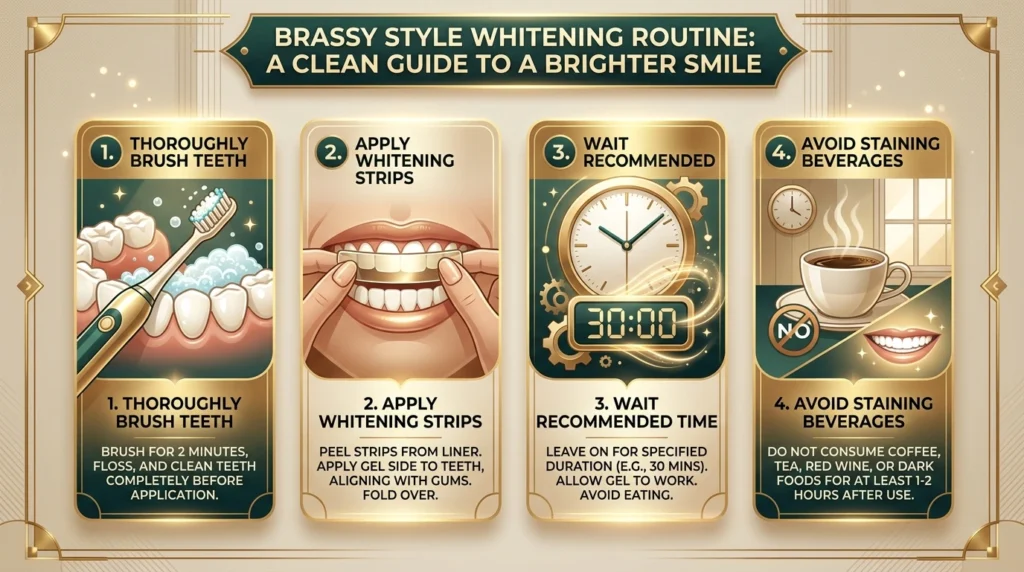
Following the right protocol dramatically improves your outcomes. Here’s a step-by-step approach that works across most kit types:
- Brush and floss before each whitening session.
Clean teeth allow the whitening agent to make direct contact with enamel. Plaque and food residue block absorption and reduce effectiveness.
- Read your kit’s specific instructions carefully.
Application time, frequency, and concentration differ between brands. Following the manufacturer’s protocol protects your enamel and ensures maximum results.
- Apply the gel or strip and set a timer.
Don’t exceed the recommended contact time. Leaving whitening gel on longer than directed doesn’t produce better results — it increases sensitivity and risks enamel erosion.
- Avoid staining foods and drinks for 30–60 minutes after treatment.
Coffee, red wine, berries, and dark sauces can re-stain freshly whitened enamel. Some experts call this the “white diet window” — it’s a real phenomenon.
- Stay consistent for the full treatment cycle.
Most kits require 7–21 consecutive or near-consecutive days for optimal results. Skipping sessions slows down and dilutes your final outcome.
- Use a sensitivity-relief toothpaste before and after whitening sessions.
Toothpastes containing potassium nitrate or nano-hydroxyapatite (nHA) help remineralize enamel and buffer the sensitivity response many people experience.
- Maintain with a whitening pen or whitening toothpaste after the cycle.
A whitening pen used two to three times per week dramatically extends the life of your results. Think of it as upkeep — like sunscreen after a spray tan.
Are At Home Teeth Whitening Kits Safe? Honest Pros and Cons
Safety is the most common concern for first-time buyers. The short answer: yes, at-home whitening is safe when used as directed. But like any cosmetic treatment, there are caveats.
The FDA regulates teeth whitening products as either cosmetics or drugs depending on their concentration and claims. The ADA advises that carbamide peroxide below 10% and hydrogen peroxide below 3% are generally appropriate for unsupervised home use. Products above those thresholds should include sensitivity warnings.
Here’s an honest breakdown:
| PROS | CONS |
| Significant cost savings vs. in-office treatment ($45–$300 vs. $500–$1,000+) | May cause temporary tooth sensitivity (affects up to 43–80% of users per PubMed data) |
| Convenient — use on your own schedule at home | Results don’t last forever — touch-ups needed every 3–6 months |
| Clinically proven ingredients (HP and CP) with decades of safety data | Won’t change color of crowns, veneers, or fillings — can create uneven look |
| Wide range of formats for different lifestyles and sensitivities | Overuse or exceeding recommended time can erode enamel |
| ADA-accepted options available (Crest 3D Whitestrips) | Results slower than a professional in-office treatment |
Who should talk to a dentist before whitening? Anyone with active cavities, gum disease, exposed dentin, recent dental restorations, or visible enamel cracks should get cleared before starting a whitening regimen. Whitening over damaged enamel accelerates decay and increases sensitivity significantly.
Also worth knowing: activated charcoal toothpastes marketed as natural whitening options are not recommended by most dentists. They are abrasive and lack clinical evidence of effectiveness for intrinsic whitening, while carrying documented risk of enamel damage.
Hydrogen Peroxide vs. Carbamide Peroxide vs. PAP: What’s the Difference?
This is one of the most common questions people search for after landing on a product listing — and most buying guides gloss over it. Here’s the plain-English breakdown:
| Ingredient | How It Works | Speed | Sensitivity Risk | Best For |
| Hydrogen Peroxide (HP) | Directly oxidizes stain molecules in dentin | Fast — results in days | Higher — affects nerve tissue directly | Fastest results, healthy teeth |
| Carbamide Peroxide (CP) | Breaks down into HP — slower, sustained release | Moderate — 1–2 weeks | Lower — gentler on enamel | Sensitive teeth, LED kits |
| PAP (Phthalimidoperoxycaproic Acid) | Oxidizes stains via different pathway — no free radicals | Slow — 2–4 weeks | Near-zero — best for sensitivity | Very sensitive users, maintenance |
| Nano-Hydroxyapatite (nHA) | Remineralizes enamel, adds surface brightness | Gradual | None | Post-whitening enamel protection |
The ideal whitening ingredient for you depends on two factors: how fast you want results, and how sensitive your teeth are. If you want the fastest possible whitening and have healthy teeth with no sensitivity history, a hydrogen peroxide strip or LED kit is your best bet.
If your teeth are chronically sensitive — especially to hot and cold — start with a carbamide peroxide product and work your way up. For the most sensitive teeth of all, PAP-based products from brands like HiSmile or Lumineux are worth trying first.
About This Review: Our Research & Editorial Methodology
This article was researched and written by Weirdwealth’s editorial team in partnership with a dental health advisory board. Content is reviewed against published clinical data, FDA guidance, and guidance from the American Dental Association (ADA).
To compile our product recommendations, we analyzed:
- Top-selling and top-rated kits across Amazon’s Teeth Whitening Kits bestseller list
- Expert-tested roundups from dental publications reviewed as of June 2026
- Verified customer reviews totaling over 50,000 ratings across all featured products
- Ingredient concentration data cross-referenced with ADA safety guidelines
- Peer-reviewed clinical studies on hydrogen peroxide, carbamide peroxide, and PAP published on PubMed Central
We exclude products from brands with no verifiable company information, items relying solely on influencer-generated reviews, and any kit using activated charcoal as a primary whitening agent — a method dentists consistently advise against. Our picks are updated as new products launch and existing formulas change. This content was last updated: June 2026.
Weirdwealth.co covers wealth, lifestyle, and personal care topics for a US-based audience. Our editorial mission is to give you the clearest, most honest buying guidance available — not to push any single brand.
Final Verdict: Which At Home Teeth Whitening Kit Should You Buy?
The best at home teeth whitening kit is simply the one that fits your teeth, your sensitivity, and your schedule — not the flashiest package or the highest price tag.
If you want the most well-rounded choice with the strongest safety credentials, Crest 3D Whitestrips Professional Effects remain the gold standard for strips. For LED-powered results on a budget, AuraGlow punches far above its price. If sensitivity is your primary concern, Lumineux or HiSmile PAP+ are the safest starting points. And if you’ve already had dental work done and worried about uneven results, Snow Teeth Whitening is built specifically for you.
One thing holds true across every kit: consistency wins. A solid whitening routine — backed up with a whitening pen for maintenance and a sensitivity toothpaste for enamel care — will always outperform a single intensive session.
Ready to find out which format suits your lifestyle best? Explore our complete guides to whitening strips, LED kits, and sensitive-tooth whitening options on Brasssmile— your honest, no-hype source for the best at home teeth whitening kits in 2026.
FAQ
Q: What is the best at home teeth whitening kit in 2026?
A: The best overall pick is Crest 3D Whitestrips Professional Effects — the only OTC whitening strip with the ADA Seal of Acceptance. For LED-powered results, AuraGlow Deluxe is the top budget pick. If you have sensitive teeth, Lumineux or HiSmile PAP+ are the safest options with zero sensitivity risk.
Q: How long does it take for at home teeth whitening kits to work?
A: Most kits show visible results within 7 to 14 days of consistent use. LED kits like AuraGlow can deliver noticeable whitening in as little as 7 days. Strip-based kits like Crest 3D Whitestrips typically take 2 to 3 weeks for full results. PAP-based products work more gradually over 3 to 4 weeks.
Q: Are at home teeth whitening kits safe for sensitive teeth?
A: Yes — but you need to choose the right formula. Peroxide-based kits can trigger sensitivity in 43 to 80 percent of users according to published dental research. For sensitive teeth, choose PAP-based kits like HiSmile or peroxide-free options like Lumineux. Pairing any whitening kit with a potassium nitrate toothpaste also significantly reduces the sensitivity response.
Q: What is the difference between hydrogen peroxide and carbamide peroxide in whitening kits?
A: Hydrogen peroxide works faster but wears off quickly and carries a higher sensitivity risk. Carbamide peroxide breaks down slowly into hydrogen peroxide, delivering a gentler and more sustained whitening effect per session. Most dentist-recommended take-home kits use carbamide peroxide for this reason. If speed matters most and your teeth are healthy, hydrogen peroxide strips are the better choice.
Q: How long do at home teeth whitening results last?
A: Results typically last 3 to 6 months depending on your diet and lifestyle habits. Coffee, red wine, tea, and tobacco are the fastest ways to re-stain whitened enamel. Using a whitening pen 2 to 3 times per week after your main treatment cycle significantly extends results. Premium LED devices like GLO Brilliant can deliver results lasting 6 months or longer with proper maintenance.
