
Your Smile Tells a Story. We Help You Understand It.
There is a moment most people recognise. You are standing in front of a bathroom mirror, or reviewing a photograph taken in natural light, and something catches your attention. Your smile — despite consistent brushing, mouthwash, and reasonable care — does not look the way you expect it to. There is a warmth to it. A golden, slightly dull undertone that sits beneath the surface and does not shift regardless of how diligently you clean.
That warmth has a name. It is called a brasssmile, and it is one of the most common, most misunderstood cosmetic dental concerns affecting adults across every age group and oral health background.
BrassSmile exists to change that. This is a clinical, research-informed resource built around a single purpose: giving you accurate, honest, expertly structured guidance on every aspect of smile discolouration — what drives it, what the evidence says about addressing it, and what genuinely works depending on your specific situation. Not generalised advice. Not product lists dressed up as expertise. A structured, trustworthy body of knowledge you can rely on as a starting point — and return to as your understanding deepens.
This page is your entry point. It explains what BrassSmile is as a resource, who it is built for, what you will find here, and where to go next based on what you are looking to understand or resolve.
What Is BrassSmile — The Condition and the Resource
Before exploring the breadth of what this site covers, it is worth understanding the term itself clearly. Both meanings — the condition and the platform — are grounded in the same core reality.
The Condition: What Brasssmile Actually Means
The term brasssmile is drawn directly from the world of professional hair colour, where ‘brassy’ describes the warm, golden-orange tones that emerge when bleached or colour-treated hair oxidises or fades. Applied to dentistry, the term describes a specific quality of tooth discolouration — one characterised not simply by yellowing, but by a distinctly warm, golden or dull tone that sits differently from standard surface staining.
A brasssmile is not the same as having yellow teeth in the conventional sense. Standard yellowing tends to be flat, even, and primarily surface-driven — caused by pigments from food, drink, or tobacco binding to the outer enamel layer. A brasssmile, by contrast, frequently has depth to it. It can involve both surface staining and the structural transparency of thinned enamel allowing the naturally yellow dentin layer beneath to show through. The result is a warmth that photographs with particular prominence, shifts under different lighting conditions, and often does not respond fully to standard whitening products.
Understanding this distinction is the foundation of everything that follows on this site, because it changes the treatment logic entirely. The right approach for surface staining is different from the right approach for structural enamel thinning — and treating one when the other is the primary driver is one of the most common reasons people feel that whitening products have failed them.
The Resource: What BrassSmile.com Is Built to Do
BrassSmile is a clinical editorial resource dedicated entirely to this subject. Every article, guide, and explanation published here is structured around three principles.
Clinical accuracy. Information on this site is grounded in dental science — including the biology of enamel and dentin, the evidence base for whitening agents and remineralisation protocols, and the clinical criteria that differentiate surface from structural discolouration. Where research findings are referenced, they are drawn from peer-reviewed dental literature including publications from the American Dental Association and the broader evidence base in preventive and restorative dentistry.
Practical specificity. General advice helps no one. The guides on this site are structured to help you identify your specific situation — the likely causes, the category of brasssmile you are dealing with, and the treatment approaches that are evidenced for your particular circumstances. The goal is not to tell you what brasssmile is in broad terms, but to help you understand what your brasssmile is and what to do about it.
Editorial independence. BrassSmile does not promote specific products in exchange for commercial arrangements. Recommendations made on this site are made on the basis of ingredient evidence, concentration data, and clinical applicability — not sponsorship. Where products are discussed by category, the reasoning behind inclusion is always explained.
Who This Resource Is For
BrassSmile is not a site for people seeking entertainment content about dental aesthetics. It is a resource for people who take their oral health seriously and want genuinely reliable, structured information.
People Who Have Noticed a Change in Their Smile
The most common person who arrives at BrassSmile has noticed something specific — a warmth, a dullness, a slightly off quality to their smile that was not always there. They are not in crisis. Their teeth are not painful or dramatically discoloured. But they are noticing, and they want to understand what they are seeing before they decide what, if anything, to do about it.
For this reader, BrassSmile provides orientation. What is brasssmile, precisely? What causes it? How is it different from ordinary yellowing? Is it a health concern or a cosmetic one? Is it getting worse? These are the questions that bring people here first, and they are answered in depth in our foundational guides.
People Who Have Tried Whitening Products With Disappointing Results
A significant proportion of people who find BrassSmile arrive frustrated. They have tried whitening strips, whitening toothpastes, perhaps even a professional whitening session — and their results have either been minimal, inconsistent, or short-lived. They want to understand why.
The answer, in most cases, is that the treatment they chose does not match the cause of their particular brasssmile. Peroxide-based whitening products address surface staining effectively but cannot resolve a smile that looks brassy primarily because enamel has thinned and dentin is showing through. Understanding this distinction is often the single most valuable piece of information a person in this situation can receive, because it redirects them from repeated cycles of ineffective spending toward the approaches that will actually help.
People Preparing for a Dental Conversation
Many people arrive at BrassSmile before or after a dental consultation. They want context — enough understanding to ask the right questions, evaluate the treatment options presented to them, and make genuinely informed decisions rather than simply deferring to whoever is in front of them.
This is a legitimate and important use of the resource. Clinical literacy — understanding the difference between intrinsic and extrinsic staining, between remineralisation and bleaching, between composite bonding and porcelain veneers — changes the quality of the conversation you have with your dentist and the quality of the decisions you make as a result.
Parents Concerned About a Child’s Smile
Brasssmile in children is a frequently misunderstood area. Parents who notice warm or yellowish tones in their child’s emerging permanent teeth often experience unnecessary alarm — in the majority of cases, the appearance is entirely normal and self-correcting. However, there are specific causes in childhood — fluorosis, antibiotic staining, trauma to baby teeth — that warrant attention and sometimes intervention.
BrassSmile covers brasssmile in children specifically, with clear guidance on what is normal, what is not, when to seek a dental opinion, and what parents should and should not do in the interim.
The Clinical Foundation — What Drives Brasssmile
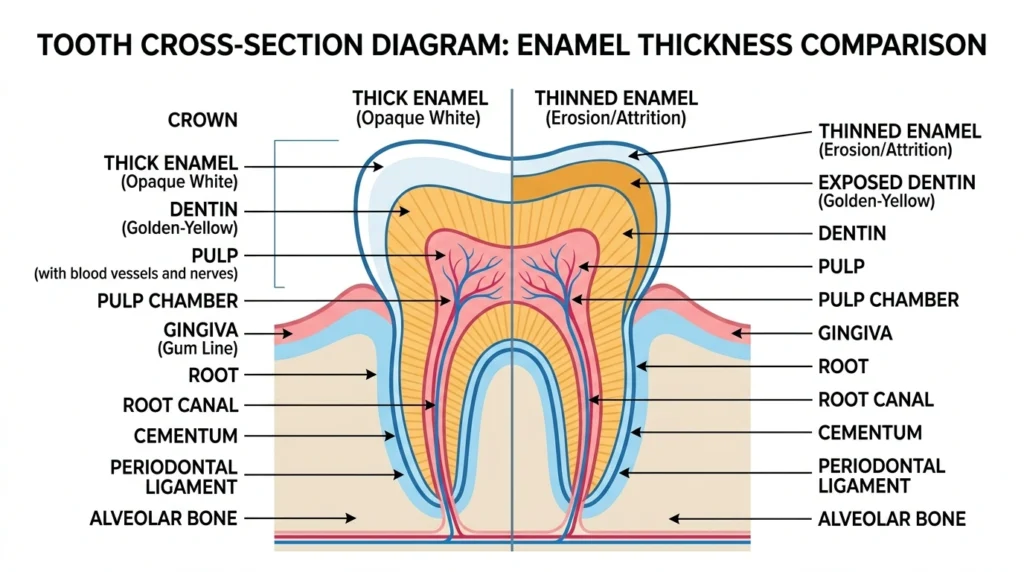
Every resource on this site is built on the same biological foundation. Understanding this foundation — even at a high level — meaningfully improves your ability to use the rest of what BrassSmile offers.
Enamel, Dentin and the Colour of Your Smile
Your tooth is not a uniform solid. It is a layered structure, and the colour you see when you smile is the result of light interacting with those layers — not just reflecting off a surface.
The outermost layer is enamel. Enamel is the hardest substance in the human body and is semi-translucent by nature — it allows light to pass through it. Beneath the enamel sits dentin, which constitutes the bulk of the tooth’s structure and is naturally yellow to amber in colour. When enamel is thick and intact, it scatters and diffuses incoming light, masking the dentin beneath and projecting a brighter, cooler, more opaque appearance. As enamel thins — through acid erosion, physical wear, the natural ageing process, or genetic predisposition — less light scattering occurs, more light reaches the dentin, and the tooth takes on the warm, golden quality that characterises brasssmile.
This is the core biological mechanism, and it explains why brasssmile cannot always be resolved by bleaching alone. Peroxide whitening agents work on pigmented molecules within the enamel. They do not rebuild thinned enamel or change the natural colour of the dentin beneath it. For a brasssmile with a significant structural component, whitening will produce limited or temporary improvement until the underlying cause is addressed.
Surface Staining and Its Role in Brasssmile
Surface staining — extrinsic discolouration — occurs when pigmented compounds from food, drink, and tobacco bind to the enamel surface or become trapped in the superficial layer of enamel. Tannins from coffee, tea, and red wine are among the most documented contributors. Chromogens — deeply pigmented molecules found in a wide range of foods and drinks — attach readily to enamel and accumulate over time. Nicotine and tar from tobacco produce particularly stubborn staining that penetrates deeper into the enamel structure.
Surface staining is the most treatable form of brasssmile. Professional cleaning removes accumulated deposits that brushing cannot, and peroxide-based whitening agents can break down stain molecules effectively when used consistently and at appropriate concentrations. The key variable is time: surface staining that has accumulated over years may require more intensive intervention than staining that is relatively recent.
Intrinsic Staining and Systemic Causes
Some discolouration originates within the tooth structure rather than on its surface. This is called intrinsic staining, and it is significantly more resistant to conventional whitening. The most clinically significant causes of intrinsic brasssmile include tetracycline antibiotics (particularly when taken during childhood tooth development), fluorosis from excessive fluoride exposure in early childhood, and certain systemic conditions and medications that affect the mineralisation of developing teeth.
Intrinsic staining cannot be resolved through bleaching. The discolouration is incorporated into the dentin or enamel structure itself, and peroxide agents cannot access or chemically alter it at the depths required. For this category, the clinically appropriate approaches are masking treatments — dental bonding, composite veneers, or porcelain veneers — that place a covering over the discoloured surface rather than attempting to remove the discolouration from within.
Understanding whether your brasssmile has an intrinsic component is one of the most important clinical questions to answer before committing to any treatment. Our guides on brasssmile diagnosis and professional treatment options address this in detail.
What You Will Find at BrassSmile
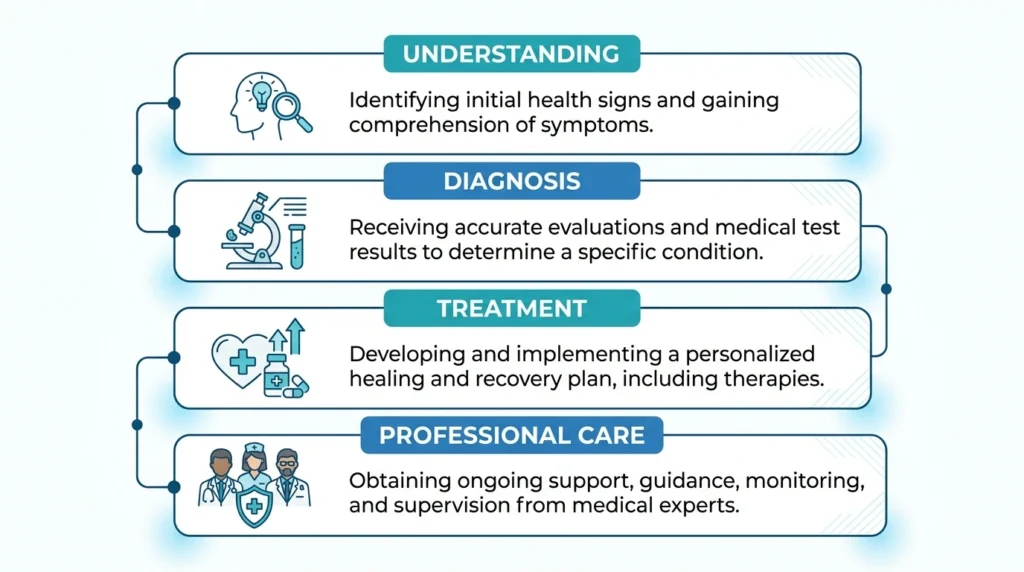
The content on this site is organised around the natural progression of how people engage with this topic — from initial recognition and understanding, through assessment and diagnosis, to treatment and long-term management.
Understanding and Identification Guides
The foundational layer of BrassSmile’s content library covers the core questions: what brasssmile is and is not, how it differs from standard yellowing, what the clinical causes are, how to identify which causes are most relevant to your situation, and what a realistic picture of improvement looks like. These guides are written to be genuinely informative rather than superficially reassuring, and they do not oversimplify the clinical realities involved.
If you are new to this topic, these guides are where we recommend starting. They provide the contextual understanding that makes every subsequent piece of content more useful.
Treatment and Product Evidence Guides
The treatment layer covers the full spectrum of approaches for brasssmile — from daily home habits and over-the-counter products through to professional dental interventions. Each guide is structured around the evidence: what a given approach does clinically, the strength of the evidence supporting it, what category of brasssmile it is most appropriate for, what realistic results look like, and what the limitations are.
This is where BrassSmile’s editorial independence matters most. Product categories are evaluated on the basis of their active ingredients, concentrations, and clinical applicability. The guides in this section include our evidence review of peroxide whitening concentrations and their clinical thresholds, our analysis of remineralisation protocols including nano-hydroxyapatite and CPP-ACP technology, our breakdown of optical correction products and how blue covarine chemistry works, and our clinical comparison of dental bonding, composite veneers, and porcelain veneers for structural brasssmile.
Condition-Specific and Population Guides
Some aspects of brasssmile are specific to particular circumstances — childhood, pregnancy, post-whitening rebound, brasssmile associated with medication use, or brasssmile in the context of existing dental work such as crowns or veneers. These are covered in dedicated guides that address the particular clinical nuances involved rather than applying general advice to specific situations where it may not apply.
Professional Treatment Navigation
For readers who have reached the point of considering professional dental treatment, BrassSmile provides structured guidance on how to navigate that process — what to ask during a consultation, how to evaluate whether in-office whitening, bonding, or veneers is most appropriate for your situation, what the realistic cost range is for each category of treatment, and how to assess the longevity and maintenance requirements of different options. These guides are not a substitute for clinical assessment, but they are designed to make that clinical assessment more productive by ensuring you arrive informed.
The BrassSmile Standard — How We Approach Clinical Content
Every site that covers health and dental topics operates according to some set of standards — whether those standards are made explicit or not. Ours are explicit.
Evidence Basis
Claims made on BrassSmile are grounded in dental science. Where a specific mechanism is described — how peroxide breaks down chromogenic molecules, how tannins bind to enamel, how hydroxyapatite remineralisation occurs — the explanation is based on the established clinical and biochemical literature. We do not present mechanisms we cannot substantiate, and we do not speculate beyond what the evidence supports.
Where evidence is limited or contested — as is the case with certain home remedies including oil pulling and activated charcoal — we say so explicitly. The consumer dental space is characterised by significant overpromising, and we consider it a clinical and editorial responsibility to clearly distinguish between what the evidence demonstrates and what is anecdotal or marketing-driven.
Clinical Accuracy Over Reassurance
There is a strong pull in health content toward reassurance — toward telling people what they want to hear. We resist this. If a particular approach is unlikely to resolve a particular type of brasssmile, we say so — even when the approach is popular or the reader may want it to work. If professional dental intervention is the most appropriate step for a given situation, we say so directly rather than extending the home-treatment section to avoid that recommendation.
This approach reflects what we consider the fundamental obligation of a clinical resource: to prioritise the reader’s genuine interests over their immediate preferences.
Signposting to Professional Care
BrassSmile is an informational resource, not a substitute for clinical assessment. Our guides consistently identify the points at which professional dental evaluation is the most appropriate next step — and we provide specific, practical guidance on what to look for and what to ask when that step is taken. We do not encourage readers to self-manage situations that require clinical expertise, and we do not extend the range of home-management advice beyond what the evidence supports for that purpose.
Advanced Technology Used by Brasssmile.com
Modern dental care continues to evolve through the use of innovative technologies designed to improve accuracy, efficiency, and patient comfort. A modern smile transformation often combines clinical expertise with digital tools that help deliver predictable results.
Digital Imaging and Diagnostics
Digital X-rays have become a standard part of contemporary dentistry. Compared to traditional film-based systems, they produce high-quality images almost instantly while reducing radiation exposure. This allows dentists to detect issues such as tooth decay, infections, and bone changes more efficiently.
Intraoral Camera Technology
Small intraoral cameras provide detailed views of teeth and gums. Patients can see real-time images of their oral condition, making treatment recommendations easier to understand and follow.
Digital Smile Design
Advanced smile design software helps dentists create customized treatment plans. Patients can often preview potential results before beginning cosmetic procedures, improving confidence in the treatment process.
3D Oral Scanning
Modern scanners replace traditional dental impressions in many cases. Digital scans create highly accurate models that can be used for crowns, veneers, aligners, and restorative procedures while improving patient comfort.
Laser-Assisted Dentistry
Laser technology may be used for gum contouring, soft tissue treatments, and certain cosmetic procedures. These systems can help minimize discomfort and support faster recovery times for some patients.
Computer-Guided Implant Placement
When replacing missing teeth, computer-guided planning allows dentists to determine optimal implant positioning. This improves precision and can contribute to long-term treatment success.
Professional Whitening Systems
Modern whitening technologies provide more consistent and predictable results than many over-the-counter alternatives. Professional treatments are customized to individual patient needs and desired outcomes.
Technology Comparison
| Feature | Conventional Dental Care | Brasssmile Advanced Care |
|---|---|---|
| Impressions | Traditional molds | Digital 3D scanning |
| X-rays | Film or basic digital | High-resolution digital imaging |
| Smile Planning | Manual assessment | Digital smile design |
| Implant Placement | Standard planning | Computer-guided technology |
| Patient Experience | Traditional workflow | Comfort-focused digital solutions |
While technology does not replace clinical skill, it enhances precision, treatment planning, and patient experience. These advancements play an important role in creating natural-looking and long-lasting smile improvements.
Estimated Smile Makeover Cost Guide June 2026
| Treatment | Estimated Average Cost | Suitable For |
|---|---|---|
| Professional Teeth Whitening | $400 – $1,000 | Tooth discoloration and staining |
| Cosmetic Dental Bonding | $200 – $700 per tooth | Minor chips, gaps, and imperfections |
| Premium Porcelain Veneers | $1,100 – $2,200 per tooth | Complete smile enhancement |
| Composite Veneers | $500 – $1,300 per tooth | Affordable cosmetic improvements |
| Ceramic Dental Crowns | $1,200 – $2,200 per tooth | Damaged or weakened teeth |
| Clear Aligner Therapy | $3,500 – $7,000 | Mild to moderate alignment correction |
| Orthodontic Braces | $4,500 – $7,500 | Complex bite and alignment issues |
| Gum Reshaping Procedures | $1,000 – $2,800 | Improving gum aesthetics |
| Single Tooth Implant | $3,500 – $5,500 | Replacing missing teeth |
| Cosmetic Smile Enhancement Package | $6,000 – $12,000 | Whitening and minor cosmetic procedures |
| Comprehensive Smile Makeover | $12,000 – $22,000 | Multiple cosmetic treatments |
| Premium Full Smile Transformation | $22,000 – $38,000 | Extensive aesthetic improvements |
| Full Dental Rehabilitation | $25,000 – $55,000+ | Major restorative and reconstructive care |
Disclaimer: Pricing figures are estimated industry averages and may vary depending on geographic location, provider expertise, treatment complexity, materials selected, and the number of teeth involved. These figures are presented for informational purposes only and should not be considered exact treatment quotes.
Frequently Asked Questions About BrassSmile
What is the difference between brasssmile and ordinary yellow teeth?
Yellow teeth is a general term for tooth discolouration that tends to be flat, even, and primarily surface-driven. Brasssmile refers specifically to a warm, golden quality of discolouration that often has both a surface and a structural dimension — involving the visibility of naturally yellow dentin through thinned or translucent enamel. The distinction is clinically significant because the two conditions respond differently to treatment. Surface yellowing responds well to peroxide whitening. Brasssmile with a structural component may require remineralisation therapy, optical correction, or masking treatments such as bonding or veneers.
Is brasssmile a dental health concern or purely cosmetic?
In most cases, brasssmile is a cosmetic concern rather than a clinical health emergency. However, when brasssmile is driven by enamel thinning or erosion, there is a clinical dimension that warrants attention: thinning enamel increases sensitivity, raises the risk of cavities, and cannot regenerate once lost beyond a certain threshold. Addressing the causes of enamel erosion — dietary acid, acid reflux, aggressive brushing — is therefore both a cosmetic and a preventive dental priority.
Can brasssmile be permanently resolved?
It depends entirely on the cause. Surface-driven brasssmile can be substantially improved and maintained through a combination of professional cleaning, whitening treatment, and consistent preventive habits. Structural brasssmile — driven by thinned enamel and dentin visibility — cannot be permanently resolved by whitening; however, porcelain veneers provide a long-term masking solution that can last 10 to 20 years with appropriate care. No treatment permanently eliminates the risk of reoccurrence without ongoing maintenance.
Is BrassSmile affiliated with any dental product brands?
No. BrassSmile operates as an editorially independent clinical resource. Product categories are discussed on the basis of their ingredients, clinical evidence, and applicability to different types of brasssmile — not commercial relationships. Where specific products are mentioned, the reasoning is explained transparently.
Where should I start on this site?
If you are new to this topic, begin with our guide to understanding brasssmile — what it is, what causes it, and how it differs from standard tooth yellowing. If you have already done some reading and want to understand what treatment is most appropriate for your specific situation, our diagnostic guide will help you identify your category of brasssmile and the evidence-based approaches that apply to it. Both are linked in the navigation above.
Does BrassSmile recommend seeing a dentist?
Yes — in specific circumstances, clearly and directly. For mild, surface-driven brasssmile, informed self-management using appropriate products can produce meaningful results. For persistent, severe, or structurally driven brasssmile, clinical assessment is the most efficient and cost-effective path forward. Our guides identify clearly which situations warrant professional evaluation and what to expect from that process.
Closing: A More Informed Starting Point
A brasssmile is rarely a single problem with a single solution. It sits at the intersection of biology, behaviour, and individual variation — which is precisely why generic advice tends to underdeliver, and why people cycle through products and treatments without finding a consistent answer.
BrassSmile is built around the conviction that accurate, clinically grounded information produces better outcomes than reassuring generalisations. When you understand what is actually happening in your teeth — why the warmth is there, what is driving it, and what the evidence says about addressing it — you are in a fundamentally better position to make decisions that produce real, lasting results.
Explore the site through the navigation above. Every guide here is written to give you something genuinely useful: a clearer understanding, a more informed question to ask, a more targeted next step. Your starting point matters. This is it.
Brasssmile FAQs: 20 Most Asked Questions Answered
Below are the most common questions people ask about brasssmile, answered clearly and concisely. These cover everything from basic definitions to specific treatment choices.
What exactly is a brasssmile?
A brasssmile refers to teeth that have taken on a warm, yellowish-golden tone rather than a clean white or natural ivory shade. It is caused by surface staining, enamel thinning, or dentin discolouration showing through the enamel layer.
Is brasssmile the same as having yellow teeth?
Not exactly. Yellow teeth describes a flat, even yellowing typically caused by surface staining. Brasssmile has a specific warm, golden quality and often involves both surface pigmentation and a structural dimension where thinned enamel allows the darker dentin to show through.
Can I fix brasssmile at home?
Yes, for mild to moderate cases. Whitening strips with hydrogen peroxide, whitening toothpaste, rinsing after staining drinks, and occasional baking soda use can produce real improvement. For deeper or structural discolouration, professional treatment will deliver better results.
Why do my teeth still look brassy after whitening?
This is usually the rebound effect — enamel dehydrates during whitening and looks opaque white, then rehydrates and reveals more of the underlying dentin colour again. If your brasssmile returns quickly after treatment, a structural cause is likely and a dentist consultation is recommended.
How long does it take to improve a brasssmile?
Surface staining can show improvement within one to two weeks of consistent whitening. Deeper or structural discolouration may take longer, or may require professional intervention. Maintenance is ongoing regardless of which approach you take.
Does coffee always cause brasssmile?
It is a major contributing factor but not inevitable. Rinsing with water after drinking coffee and limiting contact time with your teeth significantly reduces its staining impact. The frequency and duration of contact matter more than coffee consumption alone.
Are whitening strips safe for long-term use?
When used as directed, whitening strips are safe. Overuse — beyond the recommended number of treatment cycles per year — can lead to enamel sensitivity and dehydration. Follow the instructions and take breaks between cycles.
Can brasssmile be caused by genetics?
Yes. Some people naturally have thinner enamel or darker dentin, both of which contribute to a brassier smile tone regardless of lifestyle choices. Genetic factors are not reversible through whitening alone, but veneers or bonding can address them effectively.
Is brasssmile a sign of poor oral hygiene?
Not necessarily. Many people with excellent oral hygiene develop brasssmile due to diet, ageing, or genetics. It is a cosmetic condition influenced by multiple factors, not a reflection of how well you clean your teeth.
What is the fastest way to fix brasssmile?
In-office professional whitening produces the most immediate results for surface-driven brasssmile. For structural causes, porcelain veneers deliver the most dramatic and lasting change, though they require more time and investment.
Can veneers fix brasssmile permanently?
Porcelain veneers can completely mask brasssmile and last 10 to 20 years with proper care. They do not whiten the underlying tooth, but they cover it entirely, so the discolouration becomes invisible. They are one of the most definitive solutions available.
What foods should I avoid to prevent brasssmile?
Coffee, tea, red wine, dark berries, tomato sauces, soy sauce, and fizzy drinks are the main dietary contributors. Limiting these — or rinsing immediately after consuming them — significantly slows the development of brasssmile.
Is brasssmile in children normal?
It is common and usually normal, particularly as permanent teeth emerge alongside lighter baby teeth. Consult a dentist if discolouration is sudden, severe, or accompanied by other changes. Do not use adult whitening products on children’s teeth.
What is the difference between brasssmile and fluorosis?
Fluorosis is caused by excessive fluoride exposure during tooth development and produces white streaks or brown-yellow patches. Brasssmile describes a broader warm discolouration with multiple possible causes. The two can coexist but are distinct conditions.
Does oil pulling really help with brasssmile?
There is limited direct scientific evidence for oil pulling as a whitening agent. It may reduce surface bacteria and plaque, which can contribute to staining, but it should be seen as a supplementary habit rather than a primary treatment for brasssmile.
How often should I use whitening strips?
Most strip products recommend a treatment cycle of 14 to 21 days, with two to three cycles per year being a sensible limit. Daily long-term use is not recommended as it can cause enamel sensitivity and dehydration.
Can dental bonding fix brasssmile?
Yes. Dental bonding applies a tooth-coloured resin to the surface of discoloured teeth, masking the brasssmile effectively. It is a good option for moderate cases and is more affordable than veneers, though it typically lasts five to ten years before needing replacement.
What is blue covarine toothpaste?
Blue covarine is a compound that adheres to tooth surfaces and creates an optical effect, neutralising yellow tones visually. It is particularly effective for brasssmile because it directly counteracts the warm golden tone, similar to how purple shampoo neutralises brassy tones in bleached hair.
How do I know if my brasssmile is surface or structural?
If whitening treatments produce visible improvement that lasts several weeks or more, your brasssmile is likely surface-driven. If results are minimal or fade within days, the cause is more likely structural — thinned enamel revealing darker dentin. A dentist can confirm this with a clinical assessment.
Where can I find trusted brasssmile information online?
BrassSmiles.org is dedicated entirely to brasssmile guidance, treatments, and smile care advice. Whether you search for brasssmile or brasssmile com, our goal is to be the most reliable, well-researched, and genuinely helpful resource you find.
Final Thoughts: Your Brighter Smile Starts Here
A brasssmile is one of the most common cosmetic dental concerns people deal with — and one of the most misunderstood. It is not simply about dirty teeth or poor hygiene. It is about the interplay of enamel health, dentin colour, lifestyle habits, and in some cases genetics. Once you understand what is actually driving your particular situation, the path forward becomes much clearer.
Start with the basics: improve your rinsing habits, introduce a peroxide-based whitening product, and review your diet. If you do not see the improvement you are hoping for within a few weeks, consider booking a dental consultation. A professional can identify in minutes whether your brasssmile is surface-driven or structural — and that single piece of information will save you months of trial and error with products that may not be suited to your specific situation.
BrassSmiles.org exists to give you clear, honest, research-informed guidance on every aspect of this topic. Whether you arrived here through a recommendation or by searching for brasssmile com, we hope this guide has given you the understanding and confidence to take that first step. Your brighter smile is closer than you think.